

In Praise of Boredom
What a Media Detox Taught Me About Agnes Martin, Creativity, and Nothingness...

Boredom is a funny thing. We pretend we’re fine with it, but we’re actually terrified.
I stumbled into this realisation during a media detox, part of a creative retreat while I’m back home in Venezuela (yes, even I can roll my eyes at that sentence). To be clear, this was mandatory for the course; it involved little to no reading (even books), and absolutely no phones. Saying I wasn’t excited would be an understatement. I was annoyed. “it’s not like I’m addicted to social media…”, I insisted, doomscrolling past 3 a.m. for one last fix before it began - a fact that, in hindsight, should’ve been a red flag. But oh well...
At first, I told myself it was the remnants of a pseudo-punk teenager refusing to be told what to do. But pretty quickly, I realised it was really about boredom. We’re so allergic to it, we’ll do anything to avoid it. Scroll, refresh, re-read texts, check notifications (again and again), anything to fill the empty space. Maybe it’s the idea that, without distractions, we’re left with nothing but ourselves… and that’s somehow both terrifying and fascinating.
During the day, it was actually fine. I had people to see, things to do, backup plans for every possible moment of stillness (another red flag, probably). But then came the evening, and insomnia, and boredom hit me like a ton of bricks.
And yet, once I stopped fighting it, it started to take a different shape…
In that idleness, the world began to peek through the cracks. A wall looked like a map. A tree cast a shadow that felt almost deliberate. Coqui frogs croaked louder than usual (one of my favourite things about evenings in Caracas, iykyk). Suddenly, the mundane insisted on attention. Time became elastic. Observation deepened. Nothingness, it turned out, wasn’t a void; it was a lens.
Some artists and writers seem to live in that space, showing us how emptiness can breed inspiration. Jorge Luis Borges, in "The Aleph," isolates a single point in space that contains all others, an almost hallucinatory vision of simultaneity and infinity, where observation itself becomes ecstatic. In boredom, every corner, every flicker of shadow feels like an Aleph: small, ordinary, yet capable of containing multitudes.
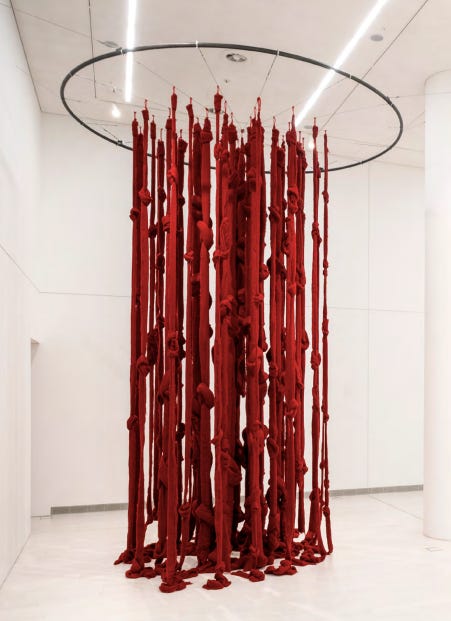
Looking at Cecilia Vicuña’s quipus, her fragile, suspended threads, bend silence into poetry, and memory. In her Precarios, nothing is permanent, yet everything is significant. Boredom, in that sense, becomes a laboratory: time slows, perception sharpens, and the mind begins to stitch meaning out of the air.
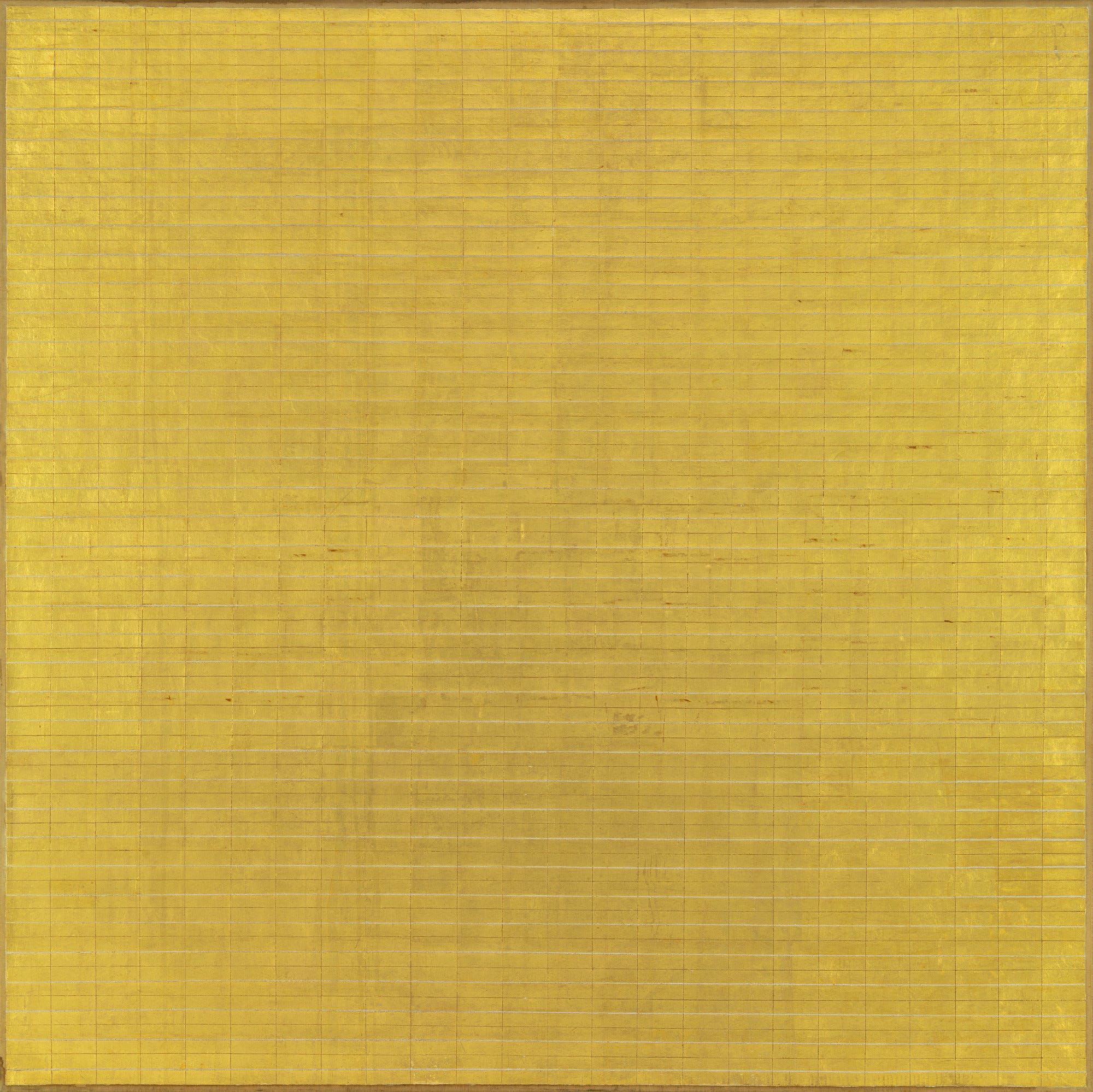
On the other hand, Agnes Martin’s grids, like Friendship , inhabit the thin space between line and paper, repetition and revelation. They might be minimal, but they’re also meditative, patient, and full of potential (10/10 would recommend staring into one for a while) . Like Martin’s work, boredom isn’t a pause; it’s a quiet pressure cooker for imagination. The longer you linger, the more things begin to crystallize in that still but expansive field.
By day three, I noticed the lack of external input had turned my mind into a kind of playground, and I felt more creative than I had in months. The quiet was generative. With no endless feed of other people’s ideas, there was finally space for my own. Whether that meant writing, coming up with new projects, or musing on more surreal things like the concept of “ethereal yogurt” or whether mycelium and oysters might be cosmically related. The mind, it seems, hates a vacuum and quickly fills the space with strange, wonderful things.
Boredom isn’t a void. It’s a practice. A lens. A permission slip to linger, to notice, to let the world unfold slowly. It’s about resetting by letting emptiness, stillness, and subtle observation reshape your way of seeing. (And yes, sometimes that involves sitting on the floor for suspiciously long periods, staring at a wall… don’t knock it ‘til you’ve tried it.)
Ngl, I can’t wait to get back to my books. Yes, I’ll eventually reply to texts (sorry…) and return to social media, though mostly for work, events, and friendships that survive on memes alone. Still, it’s comforting to be reminded that there’s a whole other world that doesn’t need Wi-Fi to exist, just a little silence.
Anyway, off to hear frogs sing,
P
This week’s recommendation: